How To Answer a Kentucky Debt Collection Court Summons
Upsolve is a nonprofit that helps you eliminate your debt with our free bankruptcy filing tool. Think TurboTax for bankruptcy. You could be debt-free in as little as 4 months. Featured in Forbes 4x and funded by institutions like Harvard University — so we’ll never ask you for a credit card. See if you qualify →
If you are sued for debt in Kentucky, the best thing you can do is respond and take action! If you are sued through circuit court or district court (not small claims), you need to file an answer within 20 days of receiving your summons and complaint. If you are sued through the small claims division of the district court, you don’t have to file an answer, but you can file a counterclaim. Local rules vary from county to county, so it’s always best to check with your court to verify the best way to proceed with your case.


Written by Attorney Tina Tran. Legally reviewed by Jonathan Petts
Updated March 26, 2026
How Do Debt Collection Lawsuits in Kentucky Work?
If you fall behind on a debt and if collection calls and letters don’t result in payment, the creditor or debt collector may file a debt collection lawsuit against you.
🏛️ In Kentucky, these cases are handled in either district court or circuit court, depending on the amount involved:
Circuit courts are courts of general jurisdiction and hear civil cases where the amount in dispute is more than $5,000.
District courts handle civil cases involving $5,000 or less. District courts also have a small claims division for cases involving $2,500 or less.
🔍 Each Kentucky court has its own local rules and procedures. Be sure to read your court paperwork carefully to see which court is handling your case and what your next steps are. No matter where your case is filed, you’ll receive two official documents: a summons and a complaint.
What Is a Summons and Complaint?
These documents officially notify you that a debt collection lawsuit has been filed against you and explain what the collector is asking the court to do.
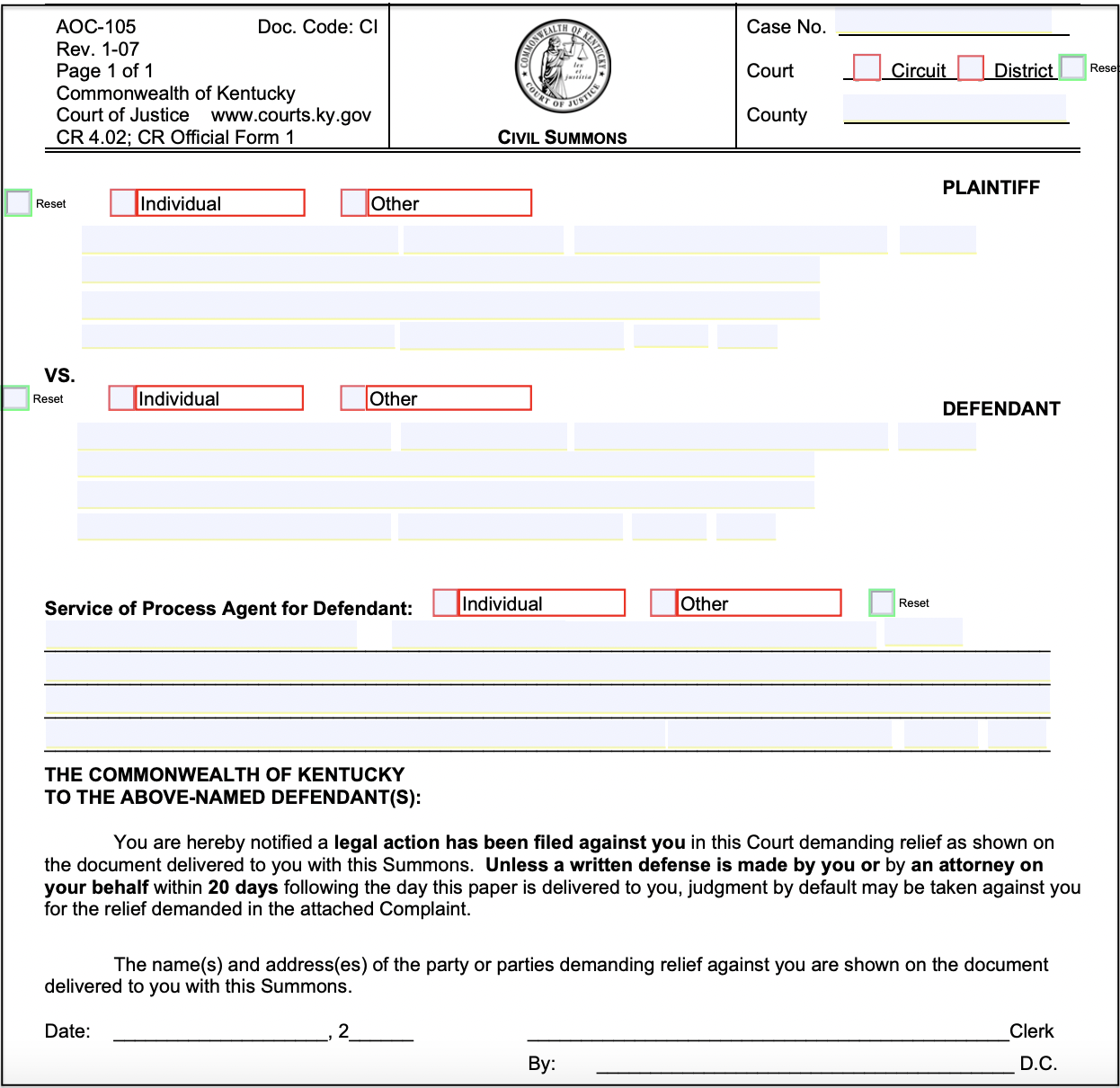
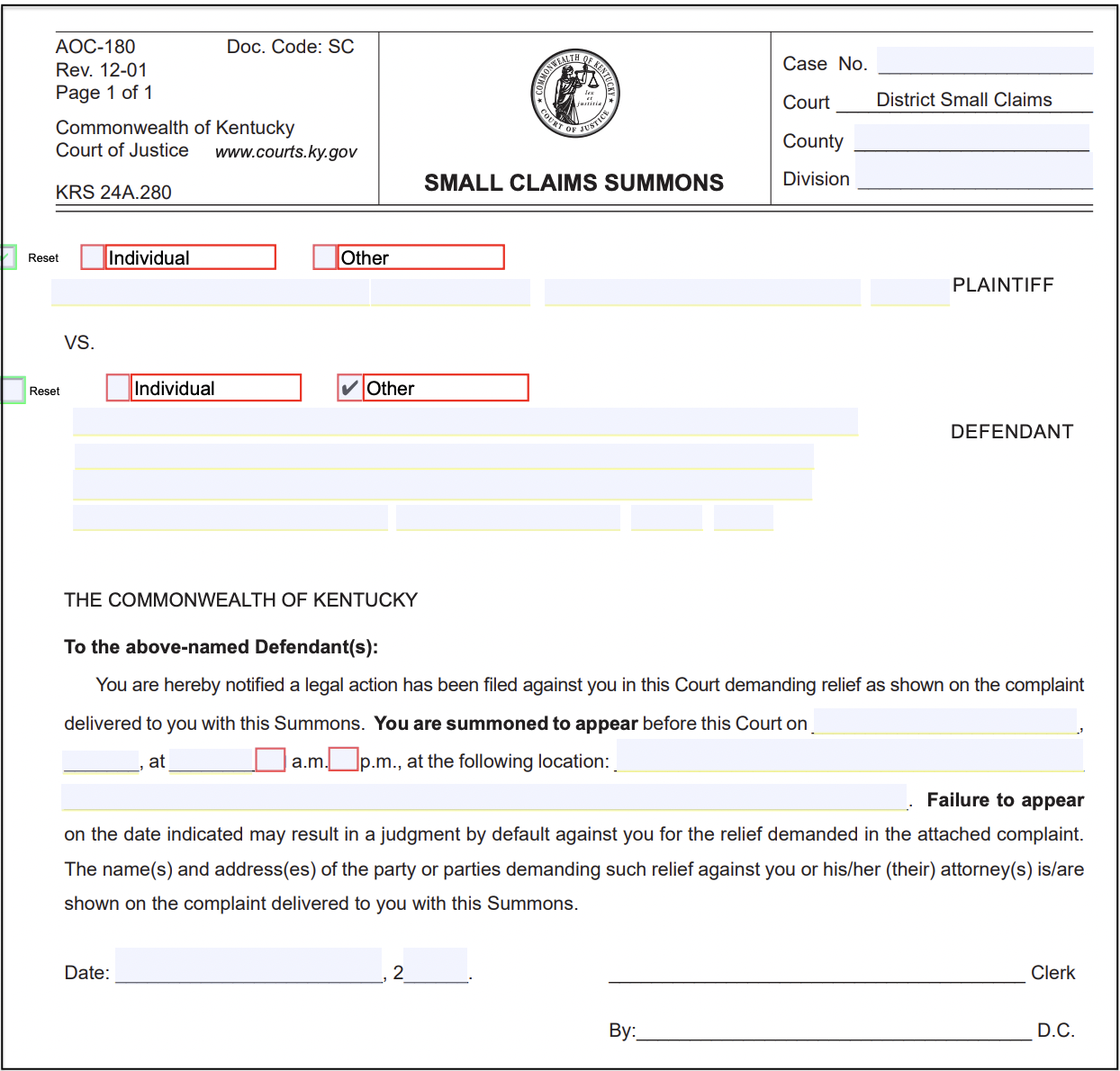
The summons tells you that a lawsuit has been filed against you. It includes important details about your case, like the deadline to respond to the complaint and which court will handle the lawsuit. In a small claims case, the summons will also include your hearing information.
The complaint explains the claims the plaintiff is making against you. Plaintiff is the legal term for the person who’s suing you. In a debt collection case, the complaint usually includes details about the debt, such as how much the collector says you owe and why they believe you’re responsible for paying it.
The complaint also explains what the debt collector wants the court to do. In most cases, they’re asking for a money judgment. A judgment is a court order stating that you owe the debt. It gives the collector the legal right to try to collect it. The amount may include the balance the collector claims you owe, interest, and possibly legal fees.
A summons in Kentucky looks like this:
A summons from the small claims division of a district court in Kentucky looks like this:
How Do You Respond to a Kentucky Court Summons for Debt Collection?
⚖️ How you respond depends on which court is handling your case.
If your case is filed in circuit court or district court (not small claims), you must file an answer within 20 days after you receive the summons. If you miss this deadline, you could automatically lose the case.
If your case is handled by the small claims division of the district court, the process is different. You usually don’t need to file a written answer. Instead, you defend the case by showing up on your scheduled court date and presenting your evidence. Your summons will list the date, time, and location of your hearing.
📌 Note: Even if your case is in small claims court and you don’t need to file an answer form, it’s still helpful to understand how to prepare your defense before your hearing.
How Do You Fill Out an Answer Form?
If your case is in circuit court or district court, you’ll need to file an answer form with the court. The answer is your opportunity to respond to the lawsuit and raise any defenses you may have.
The Appalachian Research and Defense Fund of Kentucky provides a helpful sample answer form with instructions that walk you through how to complete and file it.
✨ If you're worried about responding on your own, but you can't afford a lawyer, you can draft an answer letter for a small fee using SoloSuit. They've helped hundreds of thousands of people respond to debt lawsuits, and they have a 100% money-back guarantee.
SoloSuit is an affiliate partner, which means Upsolve may earn a small commission if you choose to use their paid service. This helps keep our services free.
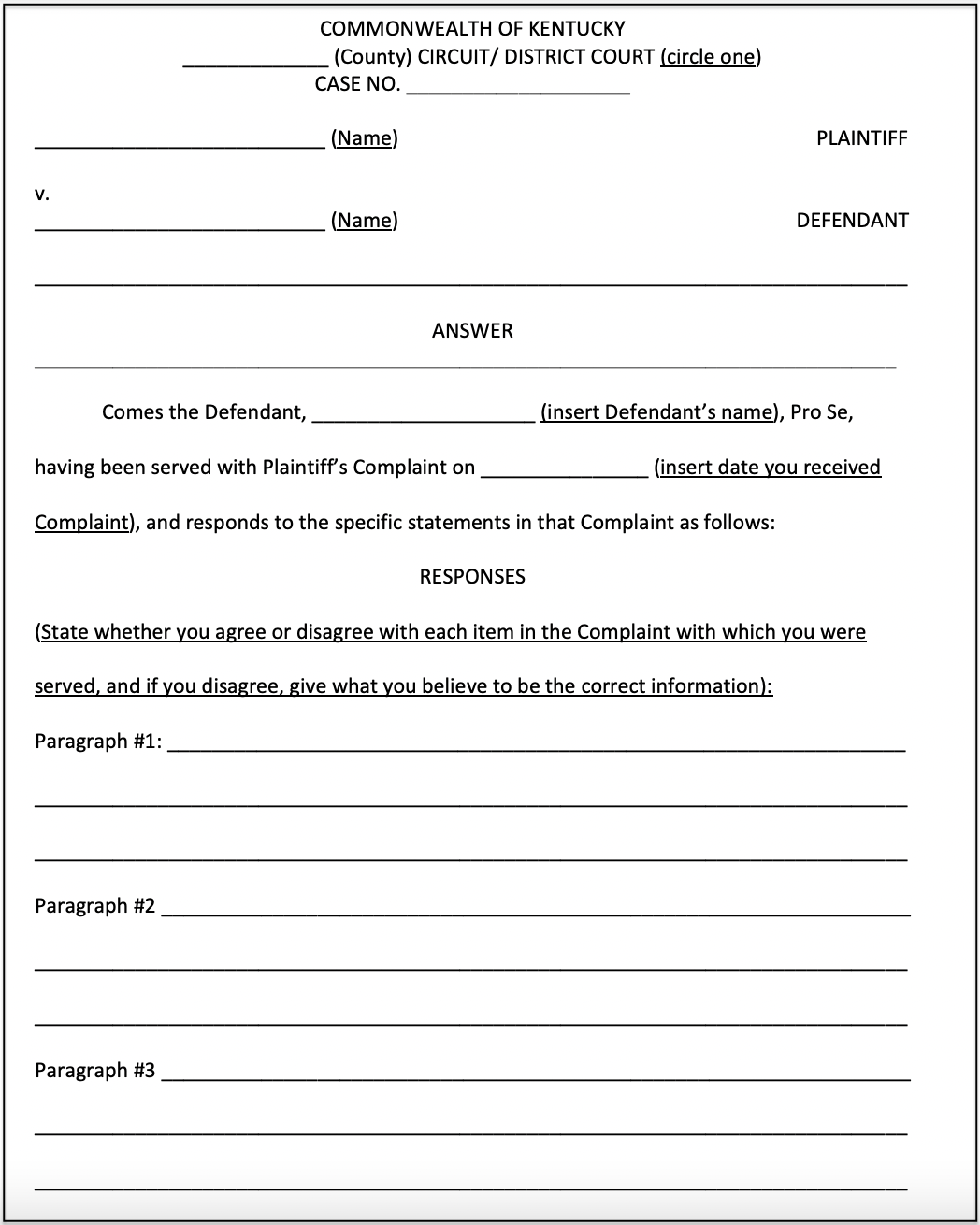
Here’s what the first page of the answer form looks like:
Step 1: Address Each Complaint/Allegation
In the “Responses” section of the answer form, respond to each claim listed in the complaint. Be sure to address every allegation.
You can respond to an allegation in three ways:
Admit it, which means you agree that the statement is true.
Deny it, which means you disagree with the statement. If only part of the statement is true, many people choose to deny the entire statement.
State that you don’t have enough information, which means you don’t know whether the statement is true without more details.
🔢 Each allegation in the complaint will be numbered. Make sure your responses match the numbered paragraphs in the complaint.
Step 2: Raise Your Defenses and Counterclaims
After responding to the allegations in the complaint, the next part of the answer form asks about your defenses. Some forms may also allow you to include counterclaims.
A defense is a reason you believe you shouldn’t be held responsible for the debt. An affirmative defense is a specific legal reason the court may not hold you responsible, even if parts of the complaint are true.
This is what the affirmative defense section of the answer form looks like:
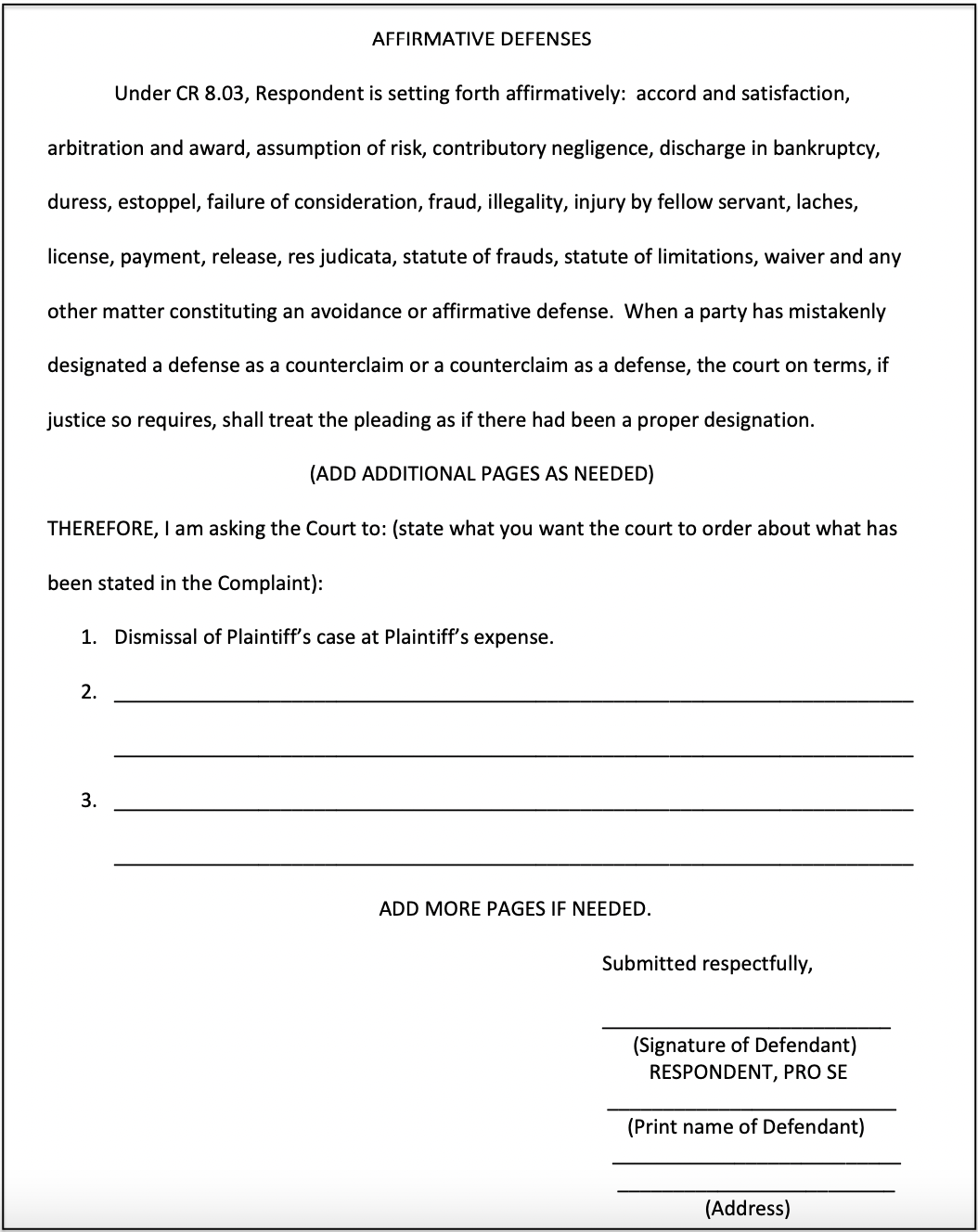
Though the form lists several affirmative defenses, many are technical legal terms. It’s okay for you to write your affirmative defense in layman’s terms in the space provided.
🛡️ Here are some common affirmative defenses used in debt collection lawsuits:
Statute of limitations: This means the debt is too old for the collector to sue over it. In Kentucky, the statute of limitations for many consumer debts is usually between five and 10 years.
Discharge in bankruptcy: If the debt you’re being sued for was included in a bankruptcy case and discharged, the collector generally can’t continue trying to collect it.
Payment: If you’ve already paid the debt, this defense may apply. Be prepared to show proof of payment.
Mistaken identity: If the debt doesn’t belong to you, this defense may apply.
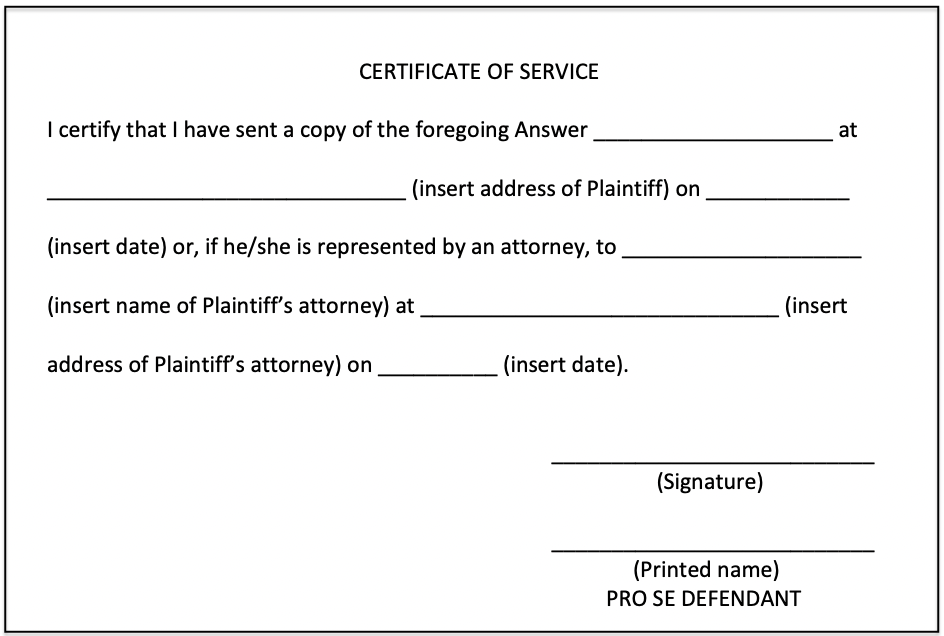
Step 3: Complete the Certificate of Service
You must also “serve” your answer form on the plaintiff. Serving your answer means delivering a copy in a way that follows the court’s rules. Sending the plaintiff a copy lets them know you’re responding to the lawsuit.
📫 You can mail a copy to the plaintiff — or to their attorney if they have one. Many people choose to use certified mail with a return receipt so they have proof that the document was mailed.
To show the court that you sent the answer to the plaintiff, you’ll fill out the certificate of service section of the form. The certificate of service section of the Kentucky answer form looks like this:
Step 4: File Your Forms With the Court Clerk Within 20 Days
After you complete your answer form, you’ll need to make two copies. File the original with the court, send one copy to the plaintiff, and keep one copy for your records.
⏳ You must file your answer with the court listed on the summons within 20 days of receiving the summons. Many people file their answer in person at the court clerk’s office. When you file, ask the clerk to stamp your copy so you have proof that your answer was filed.
Some courts may allow you to mail your answer to the clerk’s office, but it’s a good idea to call ahead and confirm whether this option is available.
What Happens After You Respond to the Lawsuit?
The next steps in your case can vary depending on the court and the county where the lawsuit was filed. In some Kentucky courts, the judge may require mediation before a trial or instead of a trial.
If you’re unsure what to expect, you can check the local court rules or contact the court clerk’s office to ask what typically happens after someone files an answer.
How To Prepare for Court Appearances
It’s normal to feel intimidated or overwhelmed when dealing with the court system. If you have to go to court, spending a little time preparing beforehand can help you feel more confident and organized.
💡 Some helpful tips include:
Arrive early for your hearing.
Speak respectfully to the judge and others in the courtroom.
Dress professionally.
Bring organized copies of any documents that support your defenses.
👉 For more guidance, check out Upsolve’s article on What Happens in Small Claims Court.
What Happens if You Don’t Respond to the Lawsuit?
The most important thing you can do in a debt lawsuit is acknowledge it and take action. If you ignore the lawsuit, it won’t just go away. Instead, you could lose the case automatically and have a default judgment entered against you.
A default judgment allows the person or company suing you to ask the court for collection actions like wage garnishment, a bank account levy, or a lien on your property.
💪 Debt collectors often rely on people not responding to lawsuits or not showing up to court. When you respond and participate in the case, you give yourself the opportunity to present your side and defend yourself. In some situations, simply responding to the lawsuit can even lead the person suing you to drop the case.
What Do You Do if the Court Already Issued a Default Judgment Against You?
If the court has already entered a default judgment against you, you may be able to file a motion to vacate the judgment. This is a request asking the court to cancel the judgment.
The judge may grant the motion if you can show good cause, which means you had a valid reason for not responding to the lawsuit or appearing in court.
You can contact the court clerk where your case was filed to ask about the process for filing a motion to vacate. If you’re considering this option, you may also want to review the resources in the next section.
Need Legal Help?
If you need more guidance or want help with your case, the following resources may be helpful:
Kentucky Legal Aid: provides free legal help to low-income Kentuckians, including assistance for people dealing with debt collection lawsuits and other consumer debt issues.
Legal Self-Help – Kentucky Court of Justice: offers self-help guides and online resources, including links to local and statewide resources.
Small Claims Handbook: a citizen’s guide to navigating a small claims complaint in Kentucky.
Kentucky Court of Justice: general information about Kentucky courts, court programs, and legal self-help guides.