How To Answer a South Carolina Debt Collection Court Summons
Upsolve is a nonprofit that helps erase your debt with our free bankruptcy filing tool. You could be debt-free in just 4 months. See if you qualify→
Upsolve is a nonprofit that erases your debt with our free bankruptcy filing tool. See if you qualify.
If you’re sued for a debt in South Carolina, the most important thing you can do is respond! Here are the basic steps: 1. Fill out an answer form. 2. Note your defenses. 3. File your forms with the court within 30 days of receiving the summons. 4. Deliver a copy of your answer form to the person suing you.


Written by Attorney Tina Tran. Legally reviewed by Jonathan Petts
Updated March 14, 2026
How Do Debt Collection Lawsuits in South Carolina Work?
When a debt goes to collections, you’ll usually get phone calls and letters first. If the issue isn’t resolved, the debt collector may decide to file a lawsuit to collect the money.
In South Carolina, most debt collection cases are filed in either magistrate court or circuit court. Magistrate court handles smaller claims, generally up to $7,500. Circuit court handles larger civil cases.
📄 If you get sued, you’ll be notified with a summons and complaint.
What Is a Summons and Complaint?
A summons and complaint are official court documents you’ll receive if someone files a lawsuit against you.
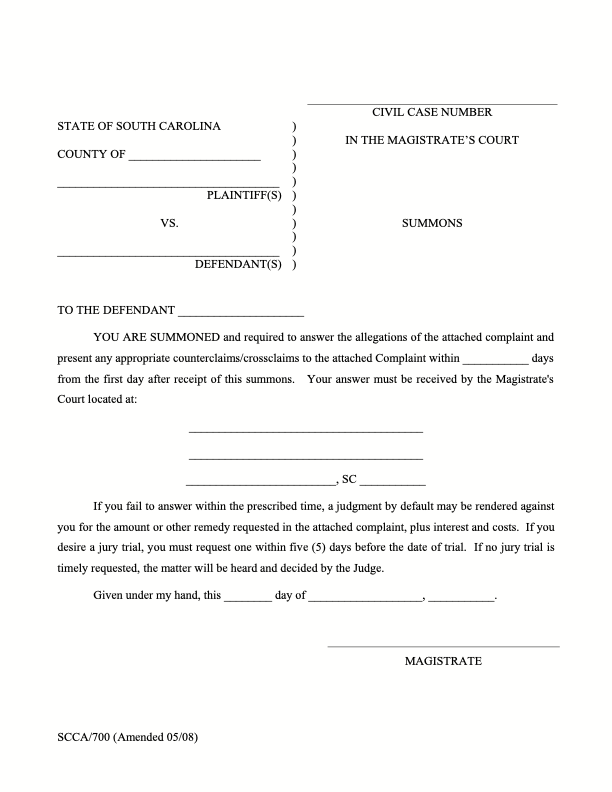
The summons lets you know that you’re being sued. It tells you which court is handling the case, who filed the lawsuit, and how long you have to respond.
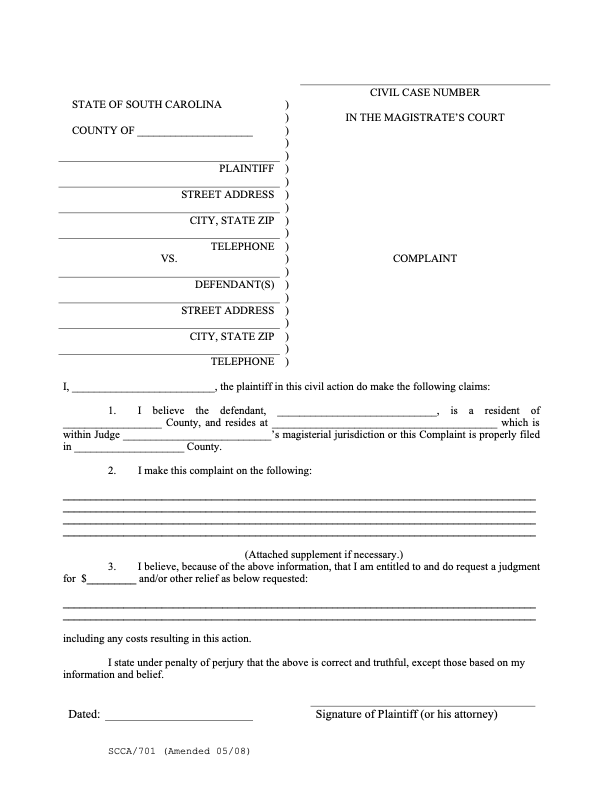
The complaint explains why the lawsuit was filed and what the person or company suing you (called the plaintiff) claims you owe. In debt collection cases, it lists the amount the collector believes you owe and why.
⚖️ It also states what the collector is asking the court to do. In most cases, they’re asking for a money judgment. A money judgment is a court order stating that you owe a specific amount. That amount may include the alleged debt, added interest, and possibly court costs or attorney fees.
Here’s an example of a South Carolina summons:
Here’s an example of a South Carolina complaint:
How Do You Respond to a South Carolina Court Summons for Debt Collection?
📝 Whether your case is handled in circuit court or magistrate court, you’ll need to file an answer with the court listed on your summons by the deadline. An answer is your response to the lawsuit. It gives you the chance to explain your side and raise any defenses. If you don’t file an answer, the court may automatically rule in favor of the collector.
In magistrate court, you may file a written answer or appear at the hearing and respond orally. Many people choose to file a written answer so they have time to think through their defenses and gather supporting documents.
How Do You Fill Out an Answer Form?
If your case is in magistrate court, you can download an answer form from the South Carolina court website. The South Carolina Bar also provides a guide that walks you through completing and filing it.
🗂️ If your case is in circuit court, South Carolina doesn’t provide a standard answer form for most civil cases. Instead, you’ll prepare your own written answer. In general, a circuit court answer must:
Include the court name, case number, the name of the plaintiff, and your name as the defendant
Respond to the numbered paragraphs in the complaint
Admit, deny, or state that you don’t have enough information to respond to each allegation
Include any defenses you plan to raise
Be signed and include your contact information
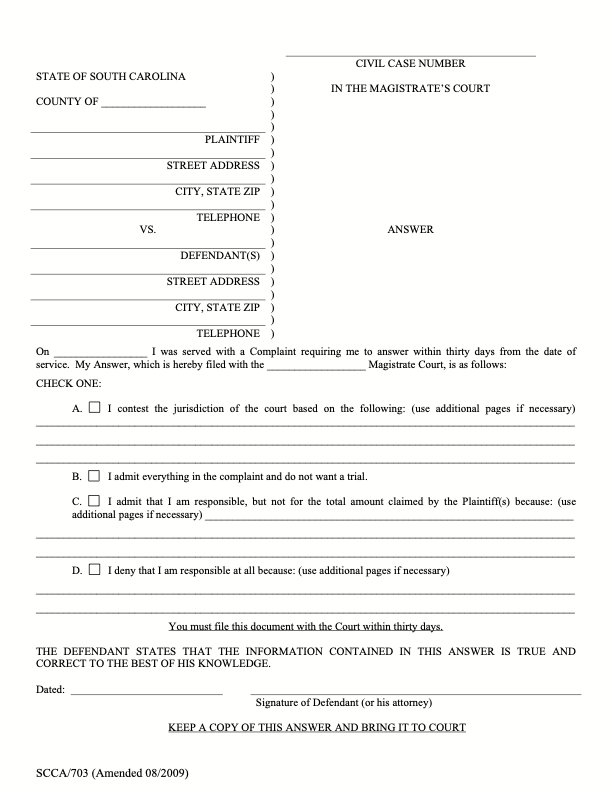
The magistrate court answer form shown below gives you an example of how this information is typically organized:
✨ If you're worried about responding on your own, but you can't afford a lawyer, you can draft an answer letter for a small fee using Solo. They've helped hundreds of thousands of people respond to debt lawsuits, and they have a 100% money-back guarantee.
Solo is an affiliate partner, which means Upsolve may earn a small commission if you choose to use their paid service. This helps keep our services free.
Step 1: Address Each Complaint/Allegation
🔢 The complaint lists the plaintiff’s claims in numbered paragraphs. When you prepare your answer, respond to each one.
For each allegation, you can:
Admit it (agree it’s true)
Deny it (disagree it’s true)
State that you don’t have enough information to admit or deny it
If a paragraph includes several statements, you can admit part of it and deny the rest. If you do this, be specific about which parts you agree with and which parts you dispute. It’s important to respond to every part of the paragraph so nothing is left unanswered.
📍 You can also challenge the court’s jurisdiction in your answer. Jurisdiction refers to the court’s authority to hear the case. People sometimes raise this issue if they were sued in a court that isn’t connected to where they live or work.
Step 2: Prepare Your Defenses and Counterclaims
Your answer is where you explain why the plaintiff shouldn’t win the case. These reasons are called defenses. In magistrate court, the answer form includes a section where you can explain why you don’t believe you owe the debt. In circuit court, you’ll include your defenses in the written answer you prepare.
Some defenses argue that the complaint isn’t true or can’t be proven. Others apply even if the complaint is true. These are called affirmative defenses. An affirmative defense is a reason the plaintiff shouldn’t win, even if the basic facts are accurate.
🛡️ Examples of affirmative defenses in debt collection cases include:
The statute of limitations for the debt has expired.
The debt was discharged in bankruptcy.
The debt isn’t yours.
The debt was already paid.
In South Carolina, affirmative defenses must be included in your written answer. If they aren’t, the court may treat them as waived, which means you may not be allowed to raise them later in the case.
You may also file a counterclaim if you believe the plaintiff violated your rights or owes you money. Counterclaims can complicate a case, and many people seek legal guidance before filing one. Free and low-cost resources are listed at the end of this article.
Step 3: File Your Forms With the Court Clerk Within 30 Days
⏳ Regardless of which court is hearing your case, you need to file your answer within 30 days of receiving the summons and complaint.
Make at least two copies of your answer. File the original with the court clerk. Most courts accept filings in person, but the clerk’s office can let you know if other options are available. After filing, send a copy to the plaintiff and keep one for your records.
Step 4: Serve a Copy of the Answer to the Plaintiff
“Serve” means to formally deliver court documents. A copy of your answer (and counterclaim, if you filed one) must be served on the plaintiff at the address listed on the summons. If the plaintiff is represented by an attorney, serve the attorney instead.
📬 You can serve the answer in person or by mail. Some people use certified mail with return receipt so they have proof the documents were sent and received.
You’ll also need to include a certificate of service. This is a short statement explaining how and when you delivered the answer. It’s typically filed with your answer or shortly afterward.
What Happens After You Respond to the Lawsuit?
➡️ Once you file your answer, the court will schedule the next steps, which may include a hearing, mediation, or trial date.
In circuit court, either side can request a jury trial. The request has to be made in writing, and there’s a deadline to do it (usually 10 days after the answer is filed). If no one asks for a jury in time, a judge will decide the case instead.
In magistrate court, a jury trial must be requested in writing at least five working days before the scheduled court date.
🤝 In some court cases, the judge may require mediation before trial. Mediation is a meeting where both sides try to resolve the dispute with the help of a neutral third party. It can be a chance to settle the case without going to trial.
How To Prepare for Court Appearances
Going to court can feel intimidating, especially if you’ve never been before. Many people feel more confident when they take a little time to prepare and follow a few simple guidelines.
🏛️ To have a successful court experience, it often helps to:
Arrive early for your hearing.
Speak respectfully to the judge and others in the courtroom.
Dress professionally.
Stay organized and bring copies of any documents that support your position.
💡 Upsolve’s article on What Happens In Small Claims Court includes additional tips that can help you feel more prepared.
What Happens if You Don’t Respond to the Lawsuit?
⚠️ The most important thing you can do after being sued for a debt is respond to the lawsuit. Filing an answer gives you a chance to tell your side of the story and requires the collector to prove their case.
If you don’t respond, the court may enter a default judgment against you. A default judgment means the court accepts the plaintiff’s claims because no answer was filed. Once a judgment is entered, the person or company suing you can use legal tools to try to collect the debt. This may include placing a lien on your property or taking funds directly from your bank account.
What Do You Do if the Court Already Issued a Default Judgment Against You?
If a default judgment has already been entered against you, don’t panic. You may still have options.
In some situations, you can ask the court to vacate the judgment. “Vacate” just means to cancel it. This usually involves filing a written request explaining why you didn’t respond to the lawsuit or why the judgment shouldn’t have been entered.
For example, the court may consider reopening the case if you never received proper notice of the lawsuit, if there was a serious mistake, or if new information has come to light.
Need Legal Help?
If you’re looking for legal help or more guidance about South Carolina debt laws, these resources may be useful:
LawHelp.org/SC offers legal guides and information about free and low-cost legal services in South Carolina.
South Carolina Legal Services provides free legal help to qualifying residents.
South Carolina Bar's Guide to Magistrate’s Court is a detailed guide on how to navigate magistrate court in South Carolina.
SC Judicial Branch Court Forms is a directory of downloadable South Carolina court forms.